Predictions and early announcements about fiction trends for 2026 – according to what publishers, industry analysts, and book bloggers are anticipating – centre on deeply human, high-quality physical and community experiences as an answer to AI-generated fluff. Readers are being attracted by high-concept hybrids while simultaneously seeking cosy escapes from global stress.
This means that overall mood points toward comfort reading, escapism, and stories that blend genres to create something fresh while providing emotional safety. Some trends, like romantasy, have been building for a while, so it’ll be no surprise if 2026 sales are dominated by romance and romantasy. However, other popular genres like thrillers, YA, and fantasy are expected to keep their appeal, even more so when they address real-world issues or incorporate elements of other genres, especially romance or fantasy.
Advertisement: Shop the Cutiest Candle Holders You’ll Ever Find




Major Fiction Trends for 2026
- Genre Blending & Hybridity in Fiction – Genres are mixing more than ever, with literary fiction incorporating speculative elements and horror novels focusing heavily on character development. More books will defy traditional categorisation.
- The Expansion of ‘Cosy’ – The cosy fantasy and cosy mystery movements are expanding into sci-fi: gentle, character-driven stories set in futuristic or spacefaring worlds. It’s also softening romances, and even horror (better known as ‘spooky horror’ or ‘soft horror’). It’s the ‘cosy everything wave’.
- Nostalgic Settings and Millennial Comfort Reading – Fiction set in the late 90s/early 2000s era will resonate with millennial readers looking for comfort in familiar settings like landlines, early internet chat rooms, and mall culture.
- Romance Dominance and the Rise of Romantasy – Romance must continue as the bestselling category, with romantasy (romance + fantasy) remaining particularly hot. Readers crave emotionally intense, relationship-driven stories blended with other popular elements.
- The ‘Artisan’ Movement vs. AI Writing – Readers are becoming more sensitive to ‘algorithmic’ writing. There is a growing premium on human-first narrative with emotional depth, quirky authorial voice, and complex moral ambiguity that AI often struggles to replicate.
- Underrepresented Histories in Fiction – Marginalised perspectives in historical fiction and retellings of classics are increasing, with new feminist retellings and books featuring queer and Black characters in historical settings.
- Socially Conscious and Hopeful Eco-Fiction –Fiction in 2026 is increasingly global and reflective of modern crises, welcoming subgenres like olarpunk & hopeful eco-fiction, which focus on community resilience and environmental optimism.
- Global Voices and Translated Fiction – There is a surge in translated fiction, particularly K-healing, Iyashikey, Chinese romance, and Latin American speculative fiction, as streaming adaptations drive readers to original source materials.
- High-Value Physicality and ‘Books as Décor’ – BookTok and Bookstagram have been the primary engines behind the revitalisation of the physical book as a lifestyle object. The physical book has become a status symbol and collectable object.
- Community-Driven Reading and Serialised Fiction – Also boosted by social media, reading is no longer a solitary act. It has become a vehicle for social connection with the return of serialised fiction, allowing readers to discuss chapters in real-time as they ‘drop’, or share opinions in spaces like Goodreads.
Key Fiction Genres for 2026
Affiliate links used here. We may earn a small commission at no cost to you.
1. Romantasy & Emotion-First Fantasy
People want fantasy that hurts a little, not just worlds that impress, so romantasy in 2026 continues to move away from spectacle-only fantasy and toward character-driven, emotionally intense stories. Readers are prioritising relationships, identity, and intimacy over complex worldbuilding.
Notable picks:
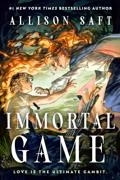
- Immortal Game – Allison Saft (2026)
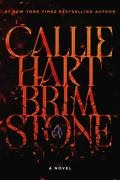
Queer romantasy focused on desire, power, and fae politics. - Brimstone – Callie Hart (2025)
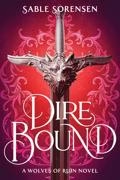
A bridge title showing where romantasy momentum is heading: angst, obsession, and slow-burn bonds. - Dire Bound – Sable Sorensen (2025)
Indie romantasy breakout driven by reader obsession, blending feral romance, danger, and emotional dependency over traditional epic scope.
2. YA That Reads Like Adult (and Sells Like YA)
YA isn’t shrinking – it’s absorbing adult readers. It is becoming the space where big feelings, social anxiety, and survival narratives feel most honest. In 2026, the strongest YA titles blur age categories while keeping emotional immediacy.
Notable picks:
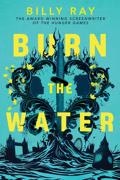
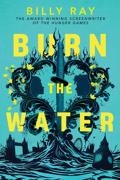
- Burn the Water – Billy Ray (2026)
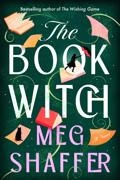
Climate-dystopian YA romance set in a flooded London. - The Book Witch – Meg Shaffer (2026)
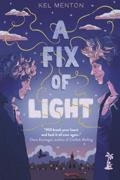
Meta-fictional YA fantasy for readers who grew up on books about books. - A Fix of Light – Kel Menton (2025)
This Irish indie YA from YA Indies listings deals with deeper psychological and genre complexity that makes it resonate beyond the teen demographic.
3. Climate Fiction Without the Apocalypse Sensationalism
There have been many ‘apocalyptical’ or ‘dystopian’ events in real life, and people crave stories that feel survivable. Cli-fi in 2026 is quieter, more personal, and less obsessed with end-of-the-world shock. These stories focus on adaptation, grief, and everyday resilience.
Notable picks:
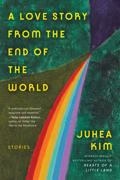
- A Love Story from the End of the World – Juhea Kim (2025)
Literary short fiction engaging with environmental collapse through human relationships. - Burn the Water – Billy Ray (2026)
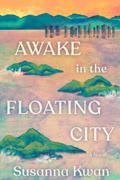
Yes, it’s showing again because it also fits here as crossover climate fiction. - Awake in the Floating City — Susanna Kwan (2025)
A thoughtful novel set in a flooded San Francisco that blends climate impact with deep human relationships and resilience in an altered world
4. AI, Tech, and Near-Future Unease
Readers seem less curious about what tech can do and more anxious about what it’s already doing. Tech-driven fiction in 2026 is about loss of agency, identity drift, and ethical ambiguity, often without hard sci-fi framing.
Notable picks:
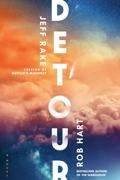
- Detour – Jeff Rake & Rob Hart (2026)
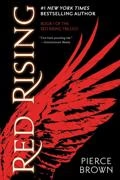
Speculative thriller involving alternate realities and fractured timelines. - Red God – Pierce Brown (est. 2026)
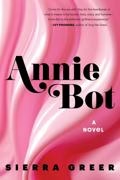
The highly anticipated seventh and final novel in the epic Red Rising Saga. Sci-fi with themes of power, control, and technological dominance. - Annie Bot – Sierra Greer (2025)
A novel told from the perspective of a robot girlfriend who seeks autonomy and freedom – a standout in tech-inflected, emotionally driven speculative fiction.
5. Psychological Horror & Quiet Dread
Rather than just shocks on the page, those reading horror fiction want stories that linger after the book ends. Horror trends for 2026 and beyond lean toward unease over gore. The fear comes from systems, relationships, and the mind itself.
Notable picks:
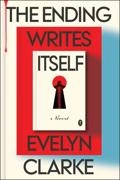
- The Ending Writes Itself – Evelyn Clarke (2026)
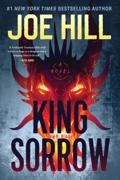
A metafictional psychological thriller built around obsession and narrative control. - King Sorrow – Joe Hill (2026)
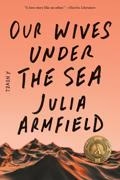
Traditional horror energy with emotional and moral weight. - Our Wives Under the Sea – Julia Armfield (2025)
Late-2025 indie-press resurgence fueled by word-of-mouth, exemplifying intimate, relational horror where dread comes from silence and emotional distance.
6. Literary Fiction That Crosses Genre Lines
People are also looking for depth without pretension and meaning without homework. ‘Literary’ fiction in 2026 increasingly borrows from speculative, historical, and surreal traditions without advertising itself as a genre.
Notable picks:
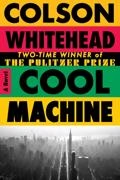
- Cool Machine – Colson Whitehead (2026)
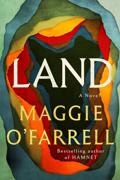
Genre-aware literary fiction that continues a socially charged narrative arc. - Land – Maggie O’Farrell (2026)
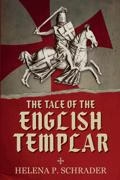
Intimate historical fiction with emotional scale. - The Tale of the English Templar – Helena P. Schrader (2025)
A powerful story about vows, persecution, and enduring love – one of IndieReader’s top-rated indie fiction picks of 2025.
What These Fiction Trends Mean for Writers and Readers
For authors, the fiction trends for 2026 are less about chasing formats and more about allowing flexibility. Hybrid genres and crossovers continue to offer strong entry points because they reflect how people actually read, not how books are shelved. Community-driven serialisation and short-form publishing are effective ways to grow alongside readers in real time. Stories that are inclusive and socially attentive stand out because they feel grounded in the world people are navigating now.
This also means a year defined by range rather than dominance for readers. Expect to move easily between genres – from hopeful, comfort-driven narratives to grounded eco-fiction and uneasy, tech-inflected stories that sit closer to the present than the future. Reading choices will continue to be shaped less by traditional gatekeepers and more by conversations: book clubs, online communities, and shared recommendations that turn quiet enthusiasm into momentum.
Advertisement: The Best 6″ Colour eReader with Case